Introduction
What to expect
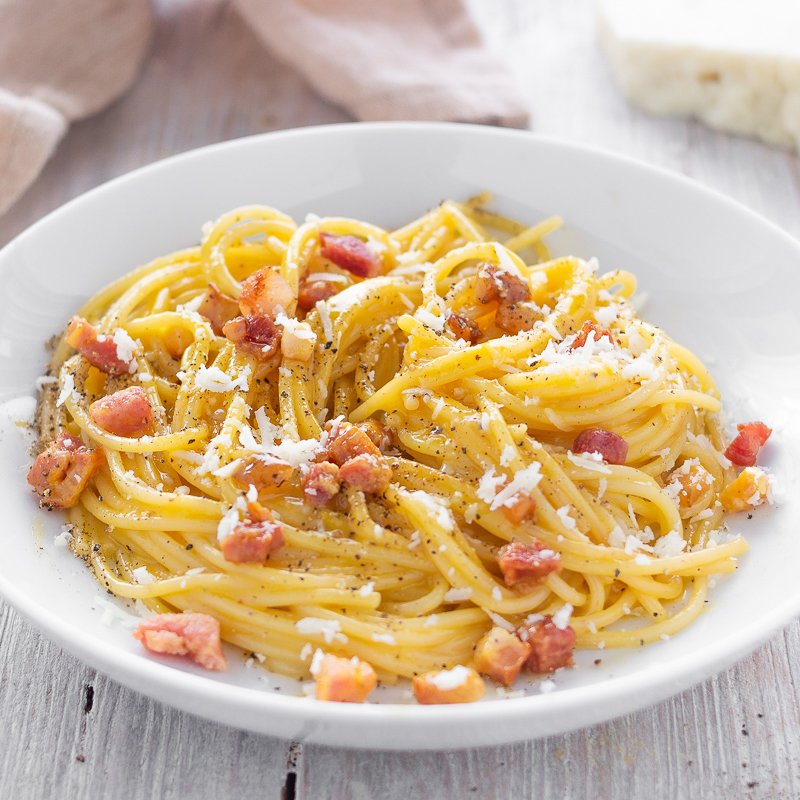
A Roman pasta classic built from eggs, Pecorino, cured pork, and black pepper.
The story
Behind the recipe
Carbonara is a pasta dish typical of Rome and the Lazio region made with cured pork, hard cheese, eggs, salt, and black pepper. The names "pasta alla carbonara" and "spaghetti alla carbonara" are unrecorded before the Second World War. The first attested recipe appeared in a 1952 Chicago cookbook. Most evidence points to the dish taking its modern form after the Allied liberation of Rome in 1944, when Italian cooks and Allied personnel combined local pasta with abundant American bacon, eggs, and cheese. Pecorino Romano and guanciale became canonical in the late 1950s and 1960s.
Method
Instructions
-
1
1. Bring a large pot of well-salted water to a rolling boil. Add the spaghetti and cook, stirring occasionally, until just al dente, 8–10 minutes.
-
2
2. Meanwhile, cut the guanciale into thin strips. Cook in a large skillet over medium heat, stirring occasionally, until the fat renders and the edges turn crisp and golden, 7–9 minutes.
-
3
3. In a medium bowl, whisk together the egg yolks, grated cheese, and a generous amount of black pepper until creamy and smooth.
-
4
4. Before draining the pasta, ladle out 1 cup of starchy cooking water and set aside.
-
5
5. Transfer the hot spaghetti to the skillet with the guanciale and toss to coat in the rendered fat. Remove from heat and let the pan cool for about 30 seconds.
-
6
6. Pour in the egg mixture and toss vigorously, adding the reserved pasta water a little at a time, until a silky sauce coats the noodles.
-
7
7. Serve immediately in warm bowls, topped with extra grated cheese and more cracked black pepper.
Adaptations