Introduction
What to expect
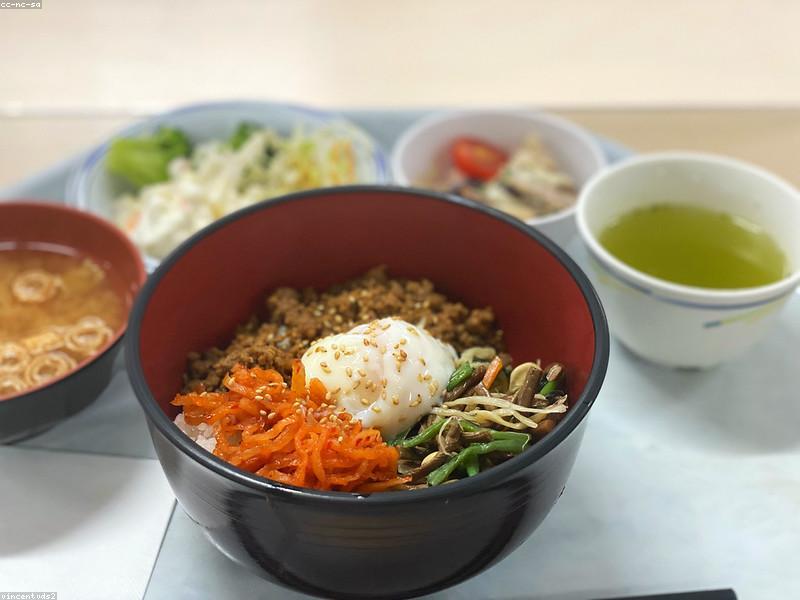
A Korean rice bowl topped with seasoned vegetables, beef, a fried egg, and gochujang.
The story
Behind the recipe
The exact origin of bibimbap is unknown. One theory suggests it originated from mixing food offerings after ancestral rites, or from farmers combining leftover vegetables and rice for a simple meal. Historical texts from around 1590 mention early names for the dish, and by the late 19th century various names in Chinese characters and Korean script were in use. Bibimbap was served to royalty and commoners alike, often eaten on Lunar New Year's Eve to use up leftover side dishes. In the late 20th century it became an internationally recognized symbol of Korean culture.
Method
Instructions
-
1
Cook the rice and set aside, keeping it warm.
-
2
Blanch spinach and bean sprouts, then season with sesame oil and salt.
-
3
Julienne carrot and zucchini, then stir-fry separately until tender.
-
4
Saute mushrooms with soy sauce and garlic until golden.
-
5
Marinate beef briefly in soy sauce, garlic, and sesame oil, then stir-fry.
-
6
Fry eggs sunny-side up in a hot pan until edges crisp.
-
7
Arrange rice in bowls and top with vegetables, beef, and egg in sections.
-
8
Serve with gochujang on the side so diners mix everything together.
Adaptations